
The main content of this page starts here
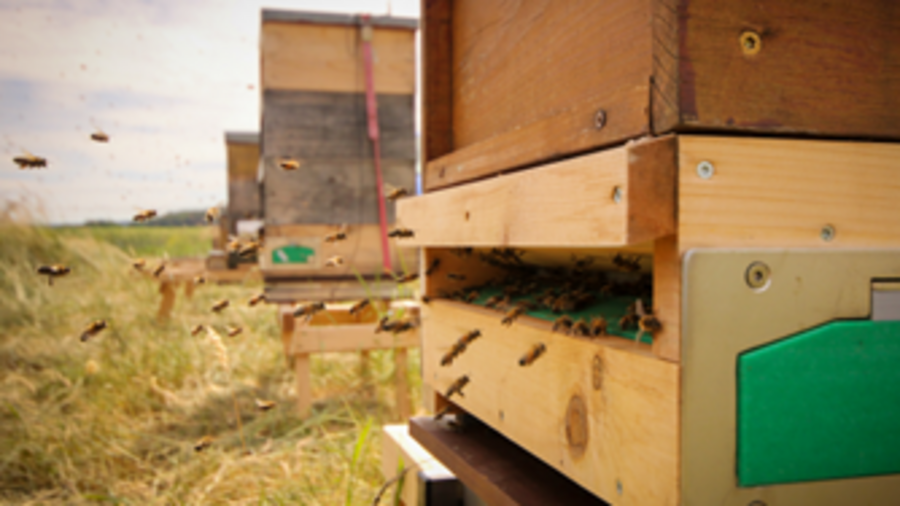
Alongside the economic importance of bee products, honeybees provide outstanding pollination services for wild and cultivated plants, making them indispensable for efficient agricultural production. Thanks to centuries of experience in apiculture, they are easy to manage in large colonies compared to other important pollinators. As generalists, honeybees can be used for pollinating various crops. Monitoring honeybee populations is essential for maintaining this key component of agricultural systems.
This module examines the importance of the agricultural landscape and the impact and effectiveness of support measures on honeybees. The module includes a nationwide representative survey of indicators of honeybee vitality: demography, performance, health, and resource utilization. For this purpose, in addition to historical records and data from conventional methods (e.g., population estimates, pollen analyses), high-resolution measurements from across Germany are collected using established technologies (e.g., data from digital hive scales, remote sensing) and, in some cases, devices currently under development (e.g., digital bee counters) to track colony development. These recordings are integrated with weather and landscape data at different spatial scales.
The resulting datasets will be continuously updated using state-of-the-art spatio-temporal analysis methods and modeling to provide a comprehensive picture of historical and current developments and trends.