
The main content of this page starts here
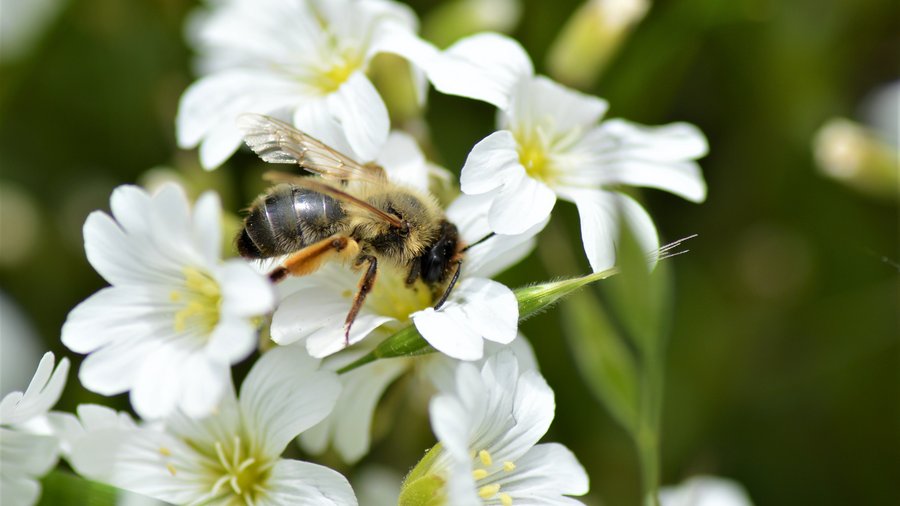
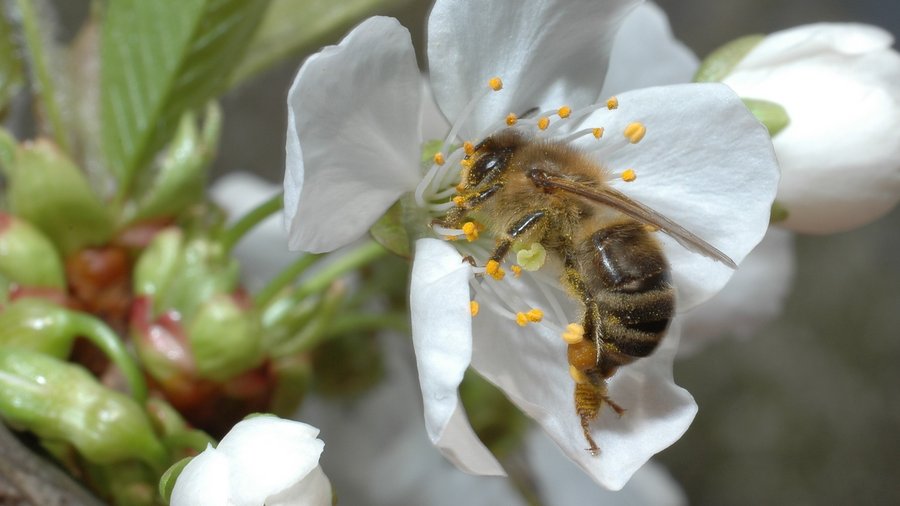
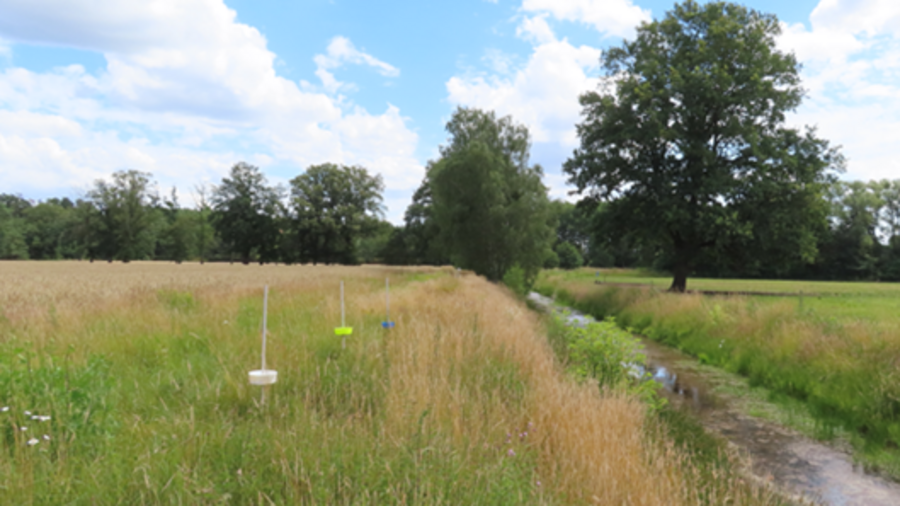
Agricultural production systems provide habitats for a multitude of organisms and are simultaneously dependent on their interactions and ecosystem services. These organisms contribute to increased yield quality and quantity in nearby fields, for example, through pollination and natural pest control. By preserving and promoting their habitats in agricultural landscapes, pollinators, beneficial insects, and other organisms can be maintained and supported, thereby ensuring the continued provision of essential ecosystem services and thus supporting the performance of agroecosystems.
Field weeds and pests also influence agroecosystems. Alongside the actual crop, field weeds provide an additional plant food source and habitat structure for insects and farmland birds, thus promoting diverse fields and supporting ecosystem services provided by, for example, flower-visiting insects. Pests also form an important part of food chains. Information on their abundance and diversity allows conclusions to be drawn about the regulatory capacity and thus the natural performance of agroecosystems. Above a certain threshold (damage threshold), however, they are considered undesirable organisms with regard to the crop. Soil fertility is also of great importance for agricultural production, as fertile soils supply the plants rooted in them with nutrients, water, and air, and thus have a significant impact on the yield and resilience of crops. In addition to soil and site characteristics, the diversity and activity of soil organisms such as microorganisms and earthworms, among other things, determine the specific soil properties and soil fertility. This is also influenced by soil cultivation, fertilization and the use of pesticides.
The second part deals with components of insect monitoring, for which a national database is lacking, but which, from the point of view of agricultural policy, should definitely become part of a national monitoring system in order to create a suitable database for the continuous improvement of agri-environmental policy. This database can then also be used to base public discussions on facts.
![[Translate to Englisch:] Schlupfwespe (Quelle: Maximilian Sittinger, JKI)](/typo3temp/assets/_processed_/9/4/csm_1_Schlupfwespe_7bab14e69a.png)
![[Bitte in "English" übersetzen:] Ausblick von einem Weinberg bei sonnigem Wetter.](/fileadmin/_processed_/3/3/csm_Weinberge_2f6b9bd3ec.jpg)
![[Bitte in "Englisch" übersetzen:] Kleingewässer (Quelle: Manuel König, JKI)](/fileadmin/_processed_/3/e/csm_Kleingewaesser_Manuel_Koenig_JKI_01_251f78923f.jpg)
![[Translate to Englisch:] Wissenschaftler entnimmt auf einem Acker Bodenproben.](/fileadmin/_processed_/a/2/csm_Bodenprobe_7d68b71e68.png "[Translate to Englisch:]")
![[Translate to Englisch:] Wiese mit Ackerwildkräutern](/fileadmin/_processed_/c/d/csm_Wiese_mit_Unkraeuternjpg_f076d91199.jpg "[Translate to Englisch:]")
![[Translate to Englisch:] Blattläuse an einem grünen Stängel.](/fileadmin/_processed_/3/1/csm_Blattlaus_65c4ce9522.jpg "[Translate to Englisch:]")