
The main content of this page starts here
Approximately three-quarters of the world's cultivated crops and nearly 90 % of all wild flowering plants depend on insect pollination. Wild bees are among the most important pollinator groups, playing a crucial role in maintaining biodiversity and ensuring food security. At the same time, approximately 52 % of the 604 wild bee species recorded in Germany are considered threatened. Against this background, agriculture, which covers around 50 % land area in Germany, plays a key role in the conservation and promotion of wild bees.
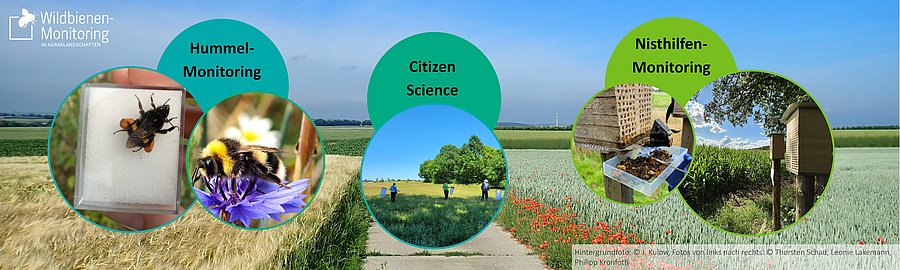
The Wild Bee Monitoring in Agricultural Landscapes provides a scientifically robust data basis for assessing trends in wild bee populations and relating these trends to changes in agricultural landscapes. The monitoring focuses on two functional groups: bumblebees and cavity-nesting wild bees. These groups are surveyed using a nationally representative sample of monitoring sites and standardized monitoring methods Citizen Science is a key component of the programme, alongside standardized field sampling protocols and modern molecular biological approaches. This not only generates valuable monitoring data but also raises public awareness of the links between agricultural landscapes, wild bee distribution and abundance, and agricultural production, thereby supporting broader transformation towards more sustainable agricultural systems.