

The main content of this page starts here
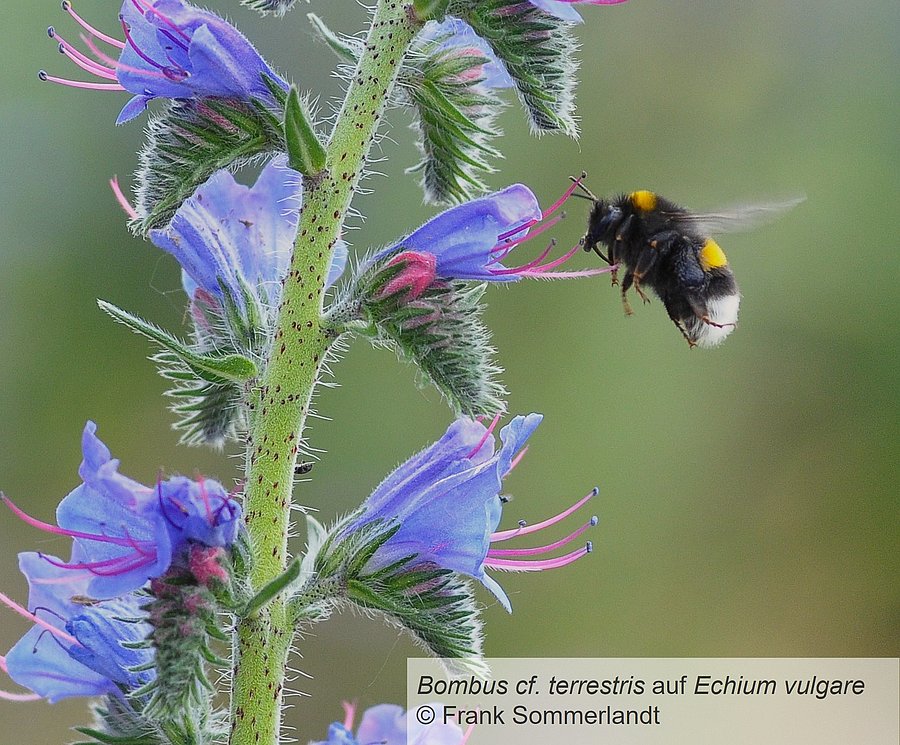
Bumblebees occupy a unique position among Germany’s wild bees because, unlike most other wild bee species, they live in social colonies rather than as solitary individuals. To sustain these colonies, bumblebees forage very efficiently for floral resources and, in doing so, play a major role in pollinating numerous wild and cultivated plant species. Several vegetable and green manure crops are pollinated predominantly - or even exclusively - by bumblebees and the quantity and quality of fruit yields can be significantly enhanced through bumblebee pollination. Consequently, bumblebees not only contribute to the conservation of biodiversity but also play an essential role in ensuring human food security.
Within the Bumblebee Monitoring submodule, 500 m transects are established within the 3 × 3 km² pre-defined monitoring plots of the nationwide Wild Bee Monitoring. These transects follow linear landscape features such as farm tracks or hedgerows. Between March and October, trained volunteers survey each transect once per month using a resource-oriented survey method. All bumblebees encountered are temporarily captured, photographed, documented, and subsequently released, ensuring a minimally invasive monitoring approach.
Following a conceptual phase from 2019 to 2020 and a pilot study in 2021, monitoring officially started in 2022. Since then, participation has grown steadily, with volunteers gathering valuable data on bumblebee distribution and abundance across an expanding network of more than 100 sites throughout Germany. These data provide the basis for calculating indicators of diversity, including species richness, the Simpson Index, and evenness, as well as abundance.