
The main content of this page starts here
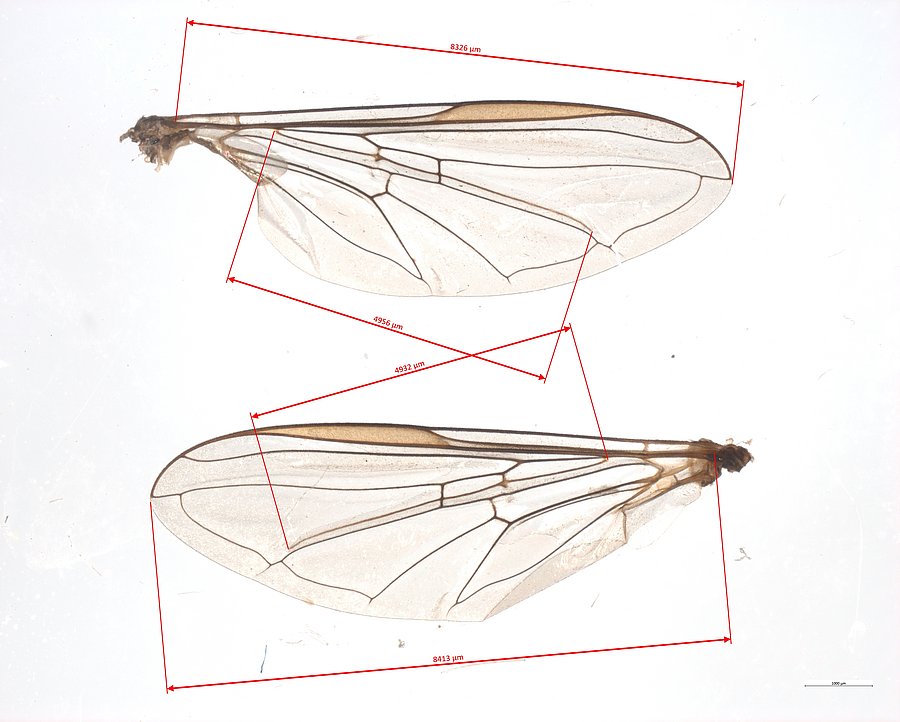
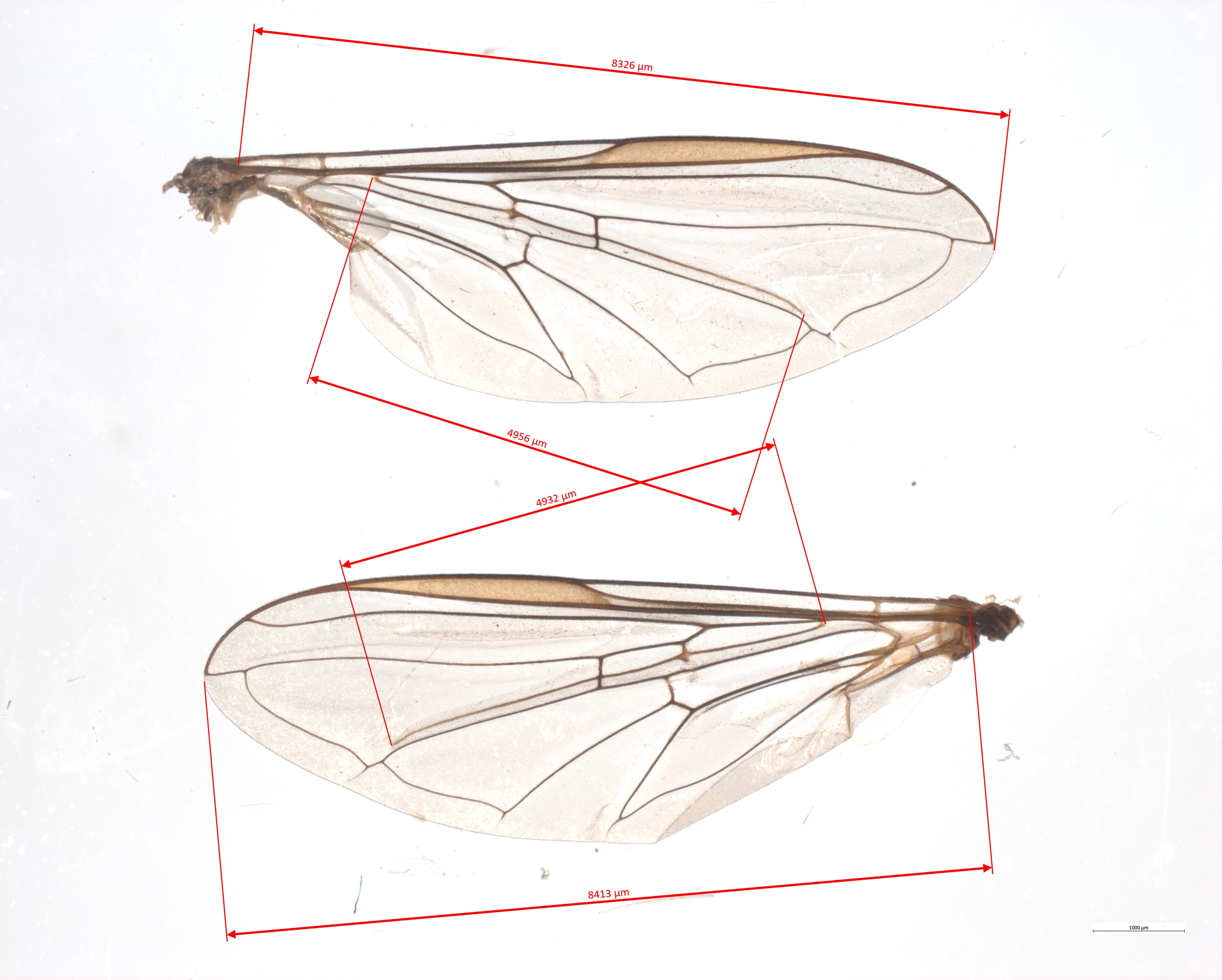
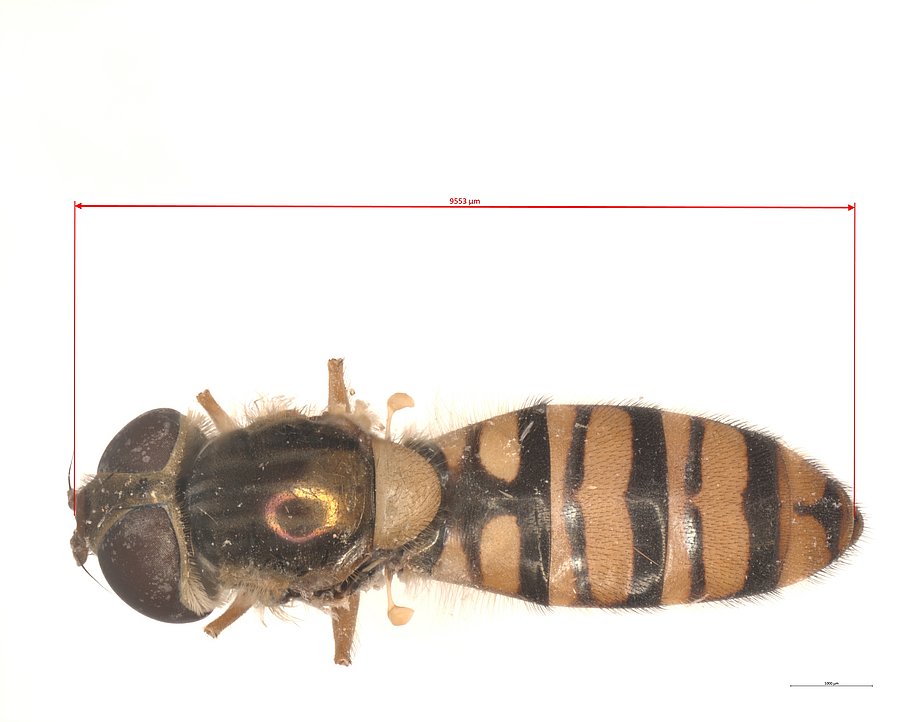
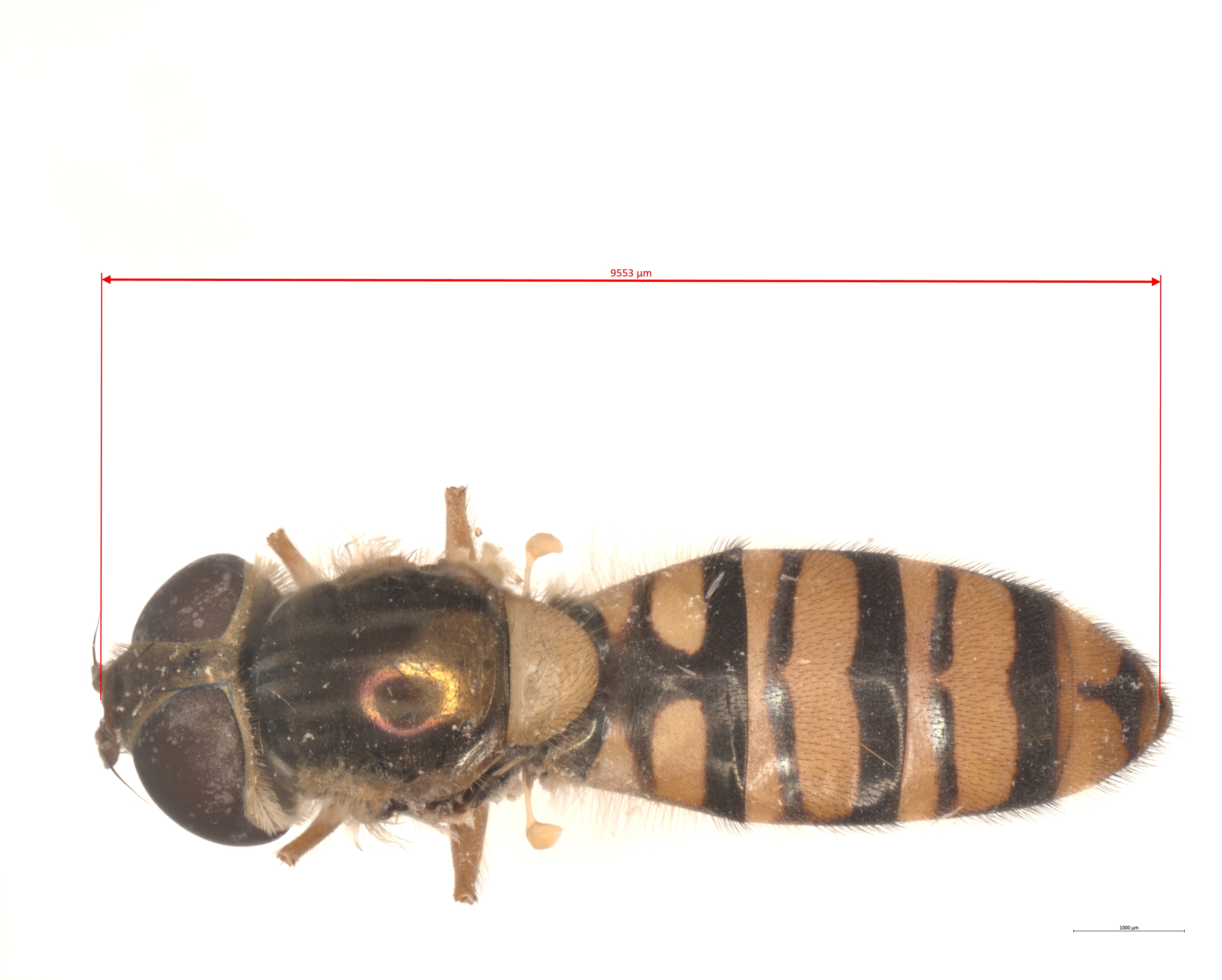
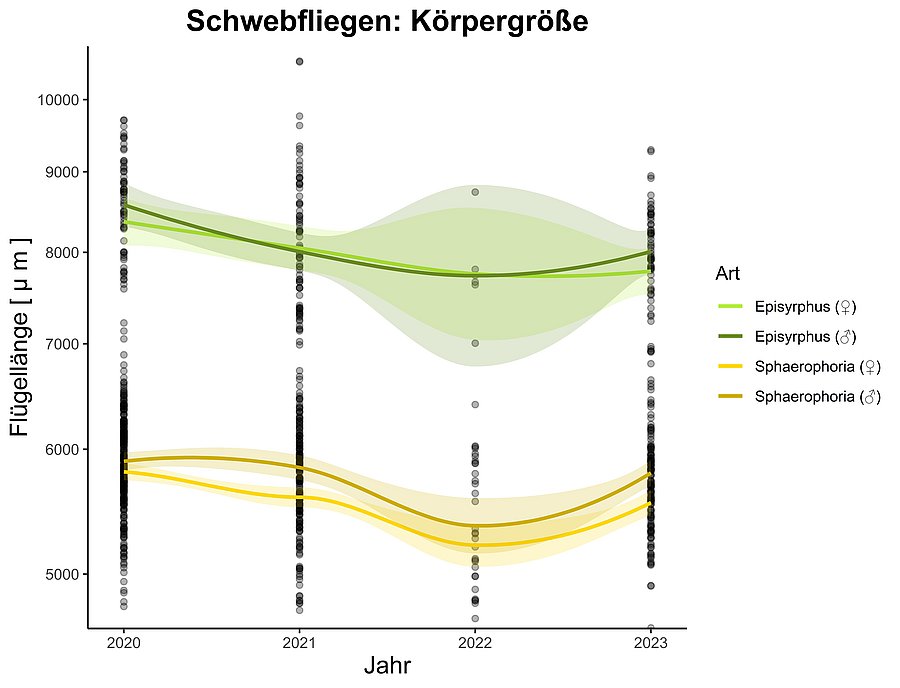
Measuring the body size of hoverflies provides important insights into the condition and medium- to long-term fitness of the these beneficial insects. The size of adult aphid-feeding hoverflies depends, among other factors, on how well their larvay were nourished - i.e., how many aphids were available to them. Changes in land use, such as reduced pesticide application, can influence aphid densities and thereby indirectly affect the fitness and performance of hoverflies.
Long-term monitoring of such traits allows the detection of changes that often remain hidden when using only classical metrics such as abundance of species richness. This approach not only highlights the role of hoverflies in biological pest control but also reveals how strongly their performance is influenced by factors such as land use and climatic change.