
The main content of this page starts here
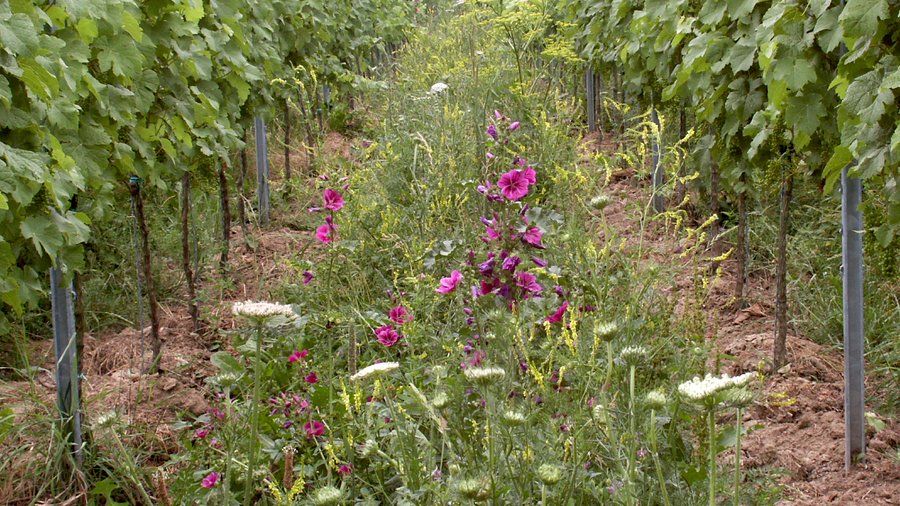
Vineyards are biodiversity hotspots due to their warm, sheltered location and their rich variety of plants and structures. At the same time, viticulture is among the crops with the highest levels of fungicide use. Therefore, in addition to the influence of different management practices and near-natural habitat structures in the surrounding areas, the reduced use of fungicides through the cultivation of fungus-resistant grape varieties can also impact insect diversity. The cover cropping in vineyards, which has been necessary since the mechanization of vineyards, significantly determines the arthropod diversity typical of vineyards.
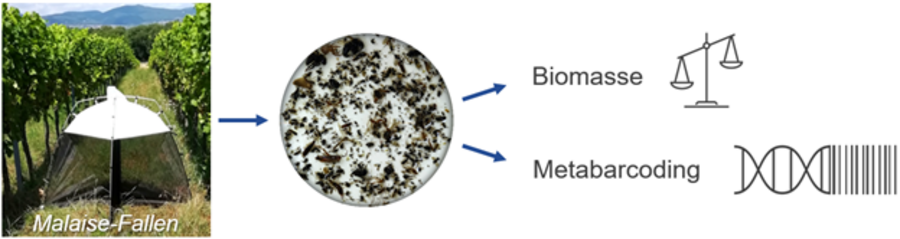
Insect trend monitoring in viticulture is used to assess long-term developments in biomass and biodiversity based on weight, number of species, species composition, and consistency. This allows for the investigation of climate change and management-related impacts on insect diversity. In addition to biomass measurement, metabarcoding is used to create comprehensive species lists. This enables a thorough evaluation of changes in species composition and the occurrence of invasive species and Red List species, thus highlighting the need for nature conservation measures. The viticulture trend monitoring project is planned to be conducted on federal vineyard land in the Moselle and Palatinate regions, where long-term access is guaranteed. These two regions represent the two extremes of German viticulture (steep slopes versus lowland viticulture).