
The main content of this page starts here
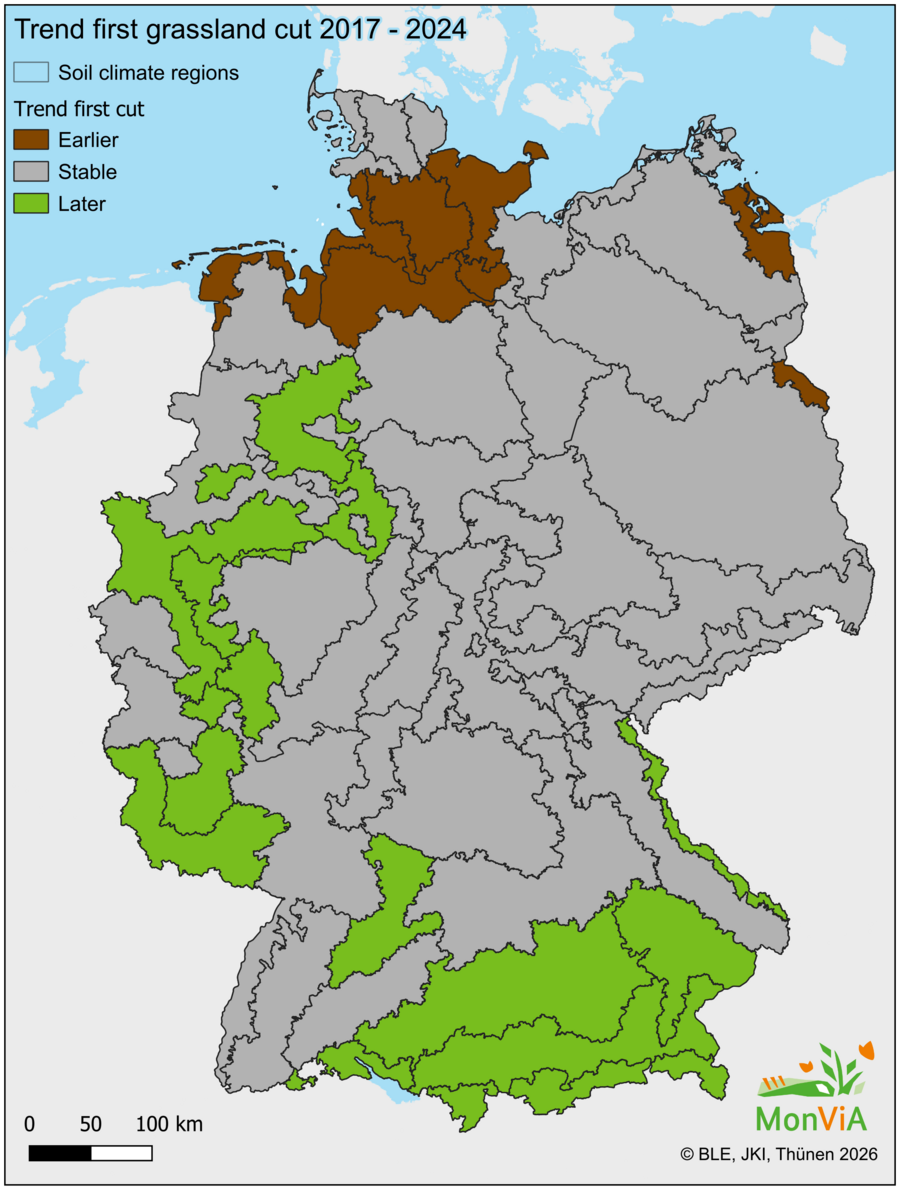
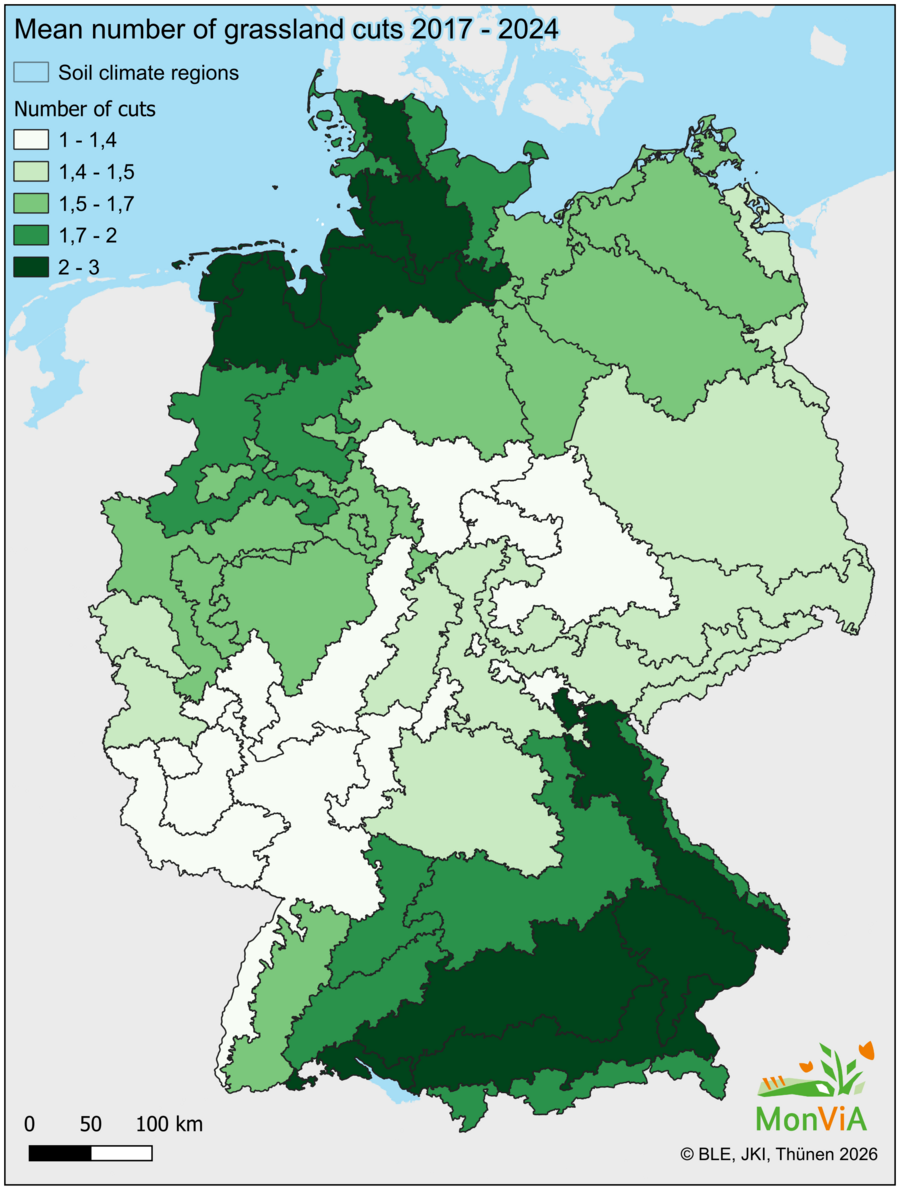
Grassland generally has a higher habitat quality for biodiversity than arable land. Flower-rich grassland can be a very important food source in the agricultural landscape, for example, for pollinators (wild bees, hoverflies, butterflies). However, if grassland is mown early in the season and/or very frequently, herbaceous plants do not reach the flowering stage and therefore do not provide resources for pollinators. Furthermore, frequent mowing prevents areas from being used as breeding habitats by many species. The indicator describes the grassland use intensity, covering permanent, temporary, and non-productive grasslands. Grassland use intensity is quantified based on mowing frequency and the date (DOY = day of year) of the first and second cuts, which are mapped nationwide using dense time series of Earth observation satellite data (Sentinel-2 and Landsat 8/9). The indicator is derived per hexagon and averaged on an area-weighted basis across different reference units. The methodology for detecting mowing events from these time series is described in the publication by Schwieder et al. (2022).
Last updated: 2026 (Based on Indicator Sheet v2024_2)